


Ramanathaswamy Jyotirlinga, Rameshwaram
Ramanathaswamy Jyotirlinga, Rameshwaram (श्री रामनाथस्वामी ज्योतिर्लिंग (रामेश्वरम)) — Jyotirlinga and Char Dham (the southern Dham)
- Tamil Nadu
- Easy (Sugam)
- PlaceRameshwaram, Pamban Island, Ramanathapuram District, Tamil Nadu
- Presiding deityShiv
Traveller Note: Entry into the garbhagriha in wet clothes after the 22 tirtha baths is not permitted; arrange a change of clothes and take darshan in traditional attire.
Scriptural and Historical Significance
- Puranic Reference: The Shiva Purana (Kotirudra Samhita) mentions it as "सेतुबन्धे तु रामेशम्" (Setubandhe tu Ramesham); the Brahma Khand (Setu Mahatmya) of the Skanda Purana describes this region in detail. According to Puranic legend, Shri Rama installed and worshipped a Shivalinga here after the victory over Lanka (in some traditions, before building the Setu, the bridge).
- Two Lingas: According to tradition, Hanuman went to Kailash to bring a linga; when he was delayed, Mata Sita fashioned a linga from sand, which came to be called the "Ramalinga". The "Vishwalinga" brought by Hanuman was also installed, and in accordance with Shri Rama's instruction the Vishwalinga is worshipped first.
- Char Dham: Of the four dhams in the tradition of Adi Shankaracharya (Badrinath, Dwarka, Puri, Rameshwaram), this is the only one that is also a Jyotirlinga. In tradition, the pilgrimage is considered complete by offering Ganga water from Kashi at Rameshwaram and immersing sand from Rameshwaram at Kashi.
- Historical Development: The original garbhagriha is believed to date to around the 12th century; the Sethupathi rulers of Ramanathapuram extensively expanded the temple in the 17th–18th centuries, and the famed third prakara corridor was completed in the time of Muthuramalinga Sethupathi.
Key Features, Architecture, Rituals and Aarti
- Style: A vast Dravidian-style temple with tall gopurams; the eastern Rajagopuram is approx. 53 metres high.
- Corridors: The temple's outer corridors are regarded as the longest among India's temples (total length approx. 1,200 metres), with approx. 1,200 carved pillars.
- 22 Tirtha Kunds: The temple complex has 22 sacred tirthas (wells/tanks); according to tradition, before darshan one bathes in Agni Theertham (the sea) and then with the waters of all these tirthas.
- Sphatika Linga Darshan: Every morning (approx. 5:00–6:00 AM) there is a special darshan and abhishek of the sphatika (crystal) linga, a distinctive tradition of this temple.
Best Time to Visit, Timings and Festivals
- Best Season: October to April; the northeast monsoon brings rain from October to December.
- Daily Darshan: Approx. 5:00 AM to 1:00 PM and 3:00 PM to 9:00 PM (Timings are subject to change; please confirm with the temple trust before travelling.)
- Major Festivals: Mahashivratri Brahmotsavam (approx. 10 days), Aadi Thirukalyanam (the Shiva-Parvati wedding festival in July–August), the Ramalinga Pratishtha festival, and pitru-tarpan (ancestral offerings) on Aadi Amavasya and Mahalaya Amavasya.
How to Reach
- By Air: Madurai Airport — approx. 175 km.
- By Rail: Rameshwaram Station — approx. 2 km; the new Pamban Rail Bridge (India's first vertical-lift sea bridge for rail), dedicated in April 2025, connects the island to the mainland; direct trains from Madurai and Chennai.
- By Road: From Madurai (approx. 175 km) and Ramanathapuram (approx. 55 km) via the Pamban road bridge (Annai Indira Gandhi Bridge).
Nearby Spiritual and Other Places
- Agni Theertham: The seashore to the east of the temple — approx. 0.2 km.
- Gandhamadhana Parvatham: Footprints of Shri Rama (Ramar Padam) — approx. 3 km.
- Panchmukhi Hanuman Temple: Approx. 2 km.
- Kothandaramaswamy Temple: It is believed that Vibhishana was crowned here — approx. 12 km.
- Dhanushkodi: An old town destroyed in the 1964 cyclone; associated by tradition with the site of the Setu — approx. 20 km.
- Devipattinam (Navapashanam): According to tradition, the Navagraha (nine planets) installed by Shri Rama — approx. 70 km.
Photos
-
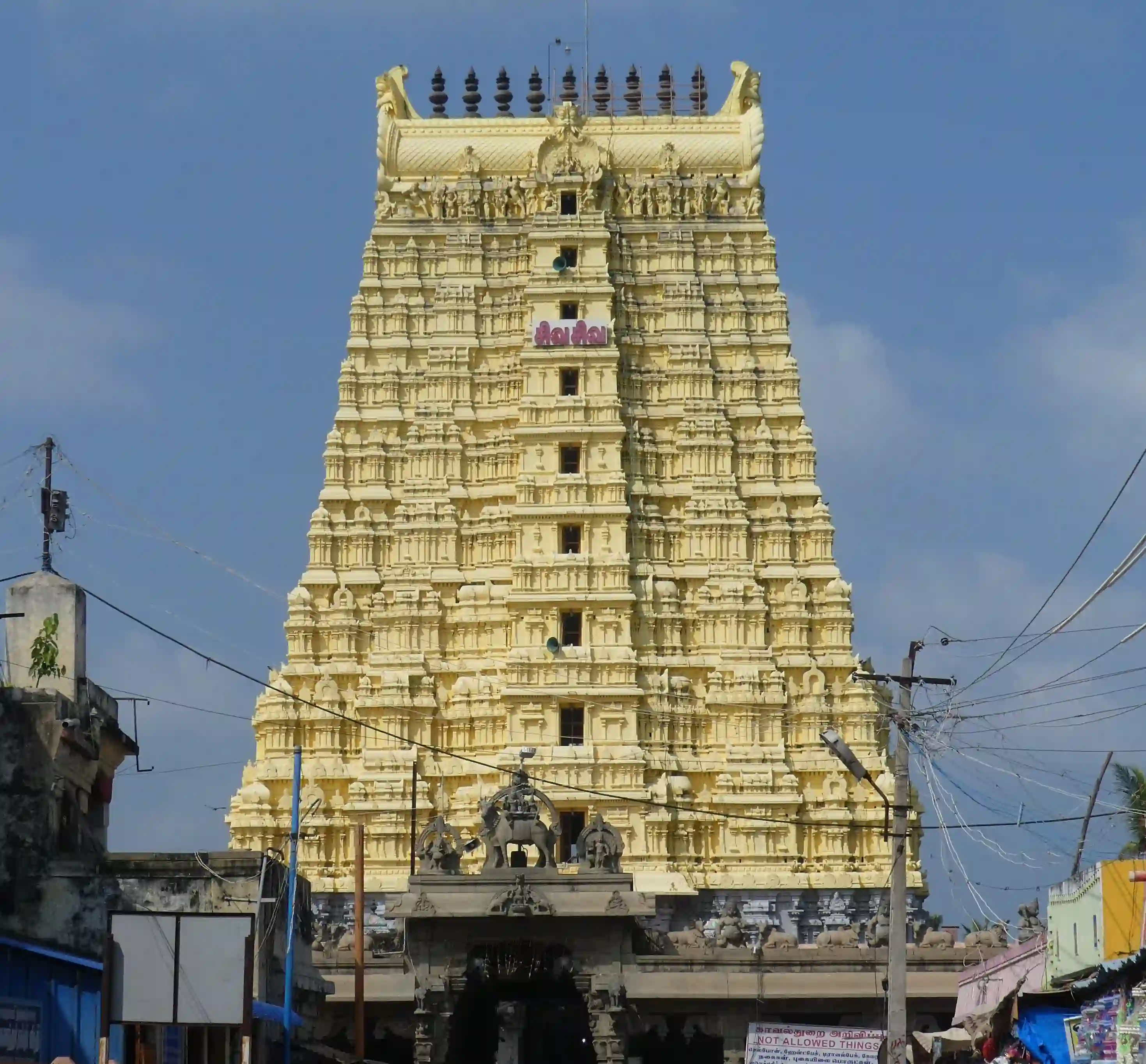
Ramanathaswamy Temple: Where spirituality meets the serenity of the ocean. Experience the divine energy of one of the sacred Char Dhams.
Pictures
No picture on this page yet.
Have a picture of this place?
If you took a picture here, you may send it for this page. Avyani looks at every picture before it is shown; your name is shown with it as you give it.
A picture of a person is shown only with that person's consent; a picture taken where photography is not allowed is not shown.
Sources 1
- Major Temples, Tirthas & Dhams of India (Avyani project reference, EN + HI editions, Sep 2026)
Where a tradition is told differently from region to region or from one sampradaya to another, the tellings are given side by side.
Darshan timings, portal dates, registration rules and distances are approximate and change from time to time; please confirm with the official notices of the temple trust or administration before travelling.